Dating Apps for Local Connections: How to Find Women Nearby

Reading time: 8 minutes
Ever scroll through a dating app and wonder why you keep getting shown profiles from 30 miles away? The right platform with precise proximity search is what separates endless chatting from actual dates. Which dating app really finds women nearby comes down to its user base in your area, its filter options, and its search logic.
The deciding factor isn't total downloads — it's active user density in your city. An app with millions of users worldwide won't do you much good if barely anyone nearby is actually active. This article breaks down which platforms have strong regional presence and how to get the most out of their search features.
Why Proximity Search Works Differently Across Dating Apps
Not every app handles distance the same way. Tinder defaults to showing profiles within a 15-to-50-mile radius, depending on your settings. Bumble works similarly but lets you narrow that down to as little as 3 miles. Hinge and apps with radar-style features show you exactly how far away someone actually is.
The technical difference comes down to GPS updating. Apps like Happn track your location continuously and show you women you've crossed paths with in real life — which works especially well in big cities. Other apps only refresh your location when you open the app, which can lead to outdated positioning.
Algorithms also tend to favor active users close to you. If you live in a smaller town and the app keeps showing you profiles 20 miles out, it's usually because there simply aren't enough active women in the tighter radius. A Pew Research Center study found that 30% of online daters use dating apps primarily because of geographic convenience.
Platforms With the Strongest Regional User Base
For local connections, a handful of platforms consistently come out on top. Bumble has a particularly strong presence in mid-sized cities, and its "Beeline" feature plus refined distance filters make it easy to zero in on your immediate area.
Tinder dominates in major metro areas like New York, Los Angeles, and Chicago. You'll find the biggest pool of options there, but also the most competition. In more rural areas, the user base thins out considerably. Hinge sits somewhere in between and tends to have a well-balanced presence in college towns and cities with a strong young-professional scene.
Plenty of Fish remains a solid, free alternative with decent regional coverage across the U.S. and Canada. The platform reports tens of millions of users, with a meaningful share concentrated outside the biggest cities. The upside: a smaller, less flashy user base often means fewer fake profiles and more people looking for something real.
Niche Apps for Specific Audiences
If you're looking for women nearby who share specific interests, niche apps are worth a look. Once curates one matched profile for you per day, often from your own region. The League focuses on career-driven, highly educated singles in major cities and manually verifies profiles.
For more casual connections, apps like Feeld offer clear geographic search tools, showing you the exact distance to each profile and letting you filter anywhere from a few miles to a few hundred.
How to Optimize Search Settings for Local Results
Most users overlook some key settings. On Tinder, set your distance slider to a maximum of 10 miles if you live in a city with over 500,000 people. In smaller towns, bump it up to 20 miles or you'll quickly run out of profiles.
Don't flip on Bumble's "Travel Mode" without good reason — it shows your profile in other locations but dilutes your local visibility. A better move: use the advanced filters in the premium tier to target specific neighborhoods or zip codes.
On apps with radar-style features, open the app regularly from the same location. The algorithm learns your usual hangouts and prioritizes women from those areas. One trick: check the app during peak hours, between 8 and 10 p.m., when the most users are typically online.
Timing and Activity Patterns Matter
You're most likely to find women nearby if you're active at the right times. According to user data, Sunday afternoons and Wednesday evenings tend to be the most active windows on most platforms. Avoid Saturday nights, when a lot of users are out and not on their phones.
Don't fake your location with a VPN or GPS spoofing. Most apps detect this and penalize your profile with reduced visibility. On Tinder, this can even trigger a shadow-ban, where your profile barely gets shown to anyone.
Free vs. Premium Features for Local Search
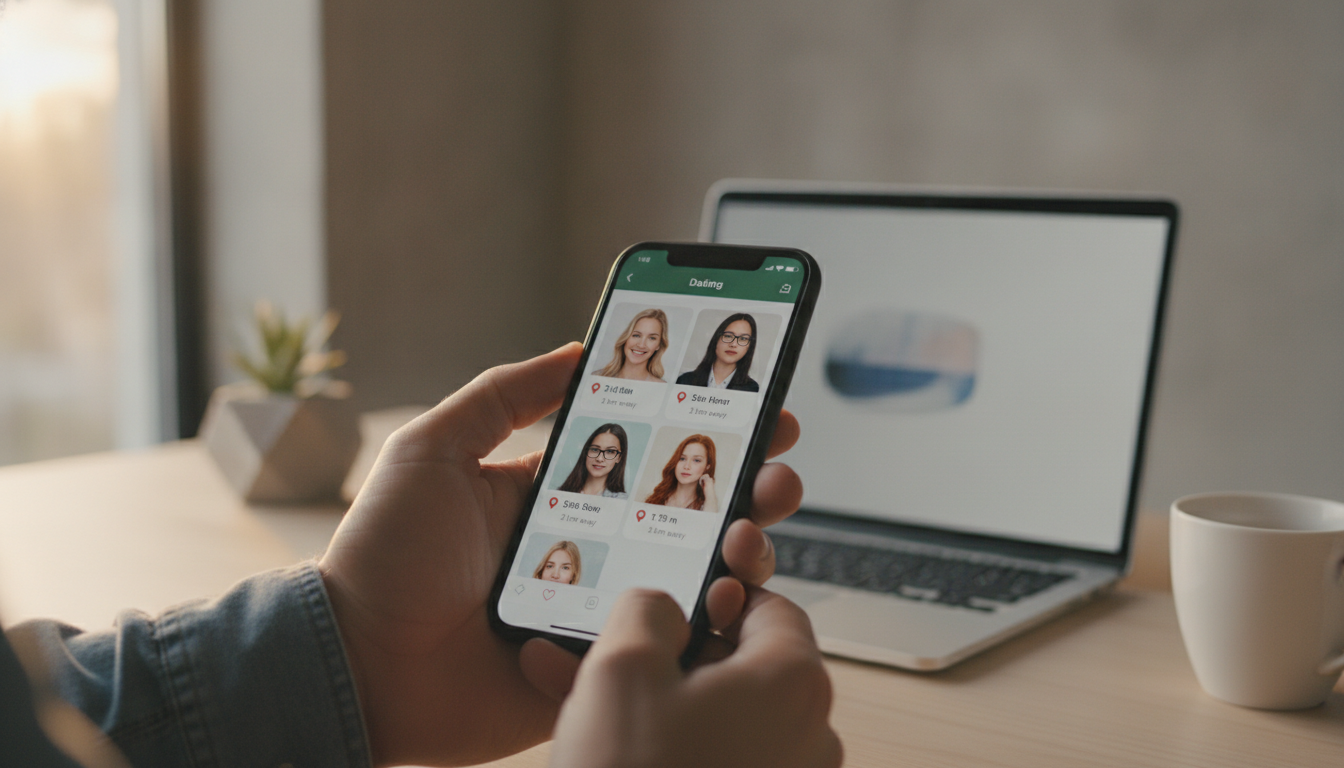
Free versions are fine for getting started, but they hit a ceiling when it comes to targeted regional search. Tinder Plus runs about $10 a month and unlocks unlimited likes plus the "Passport" feature, which is less relevant for local search. More useful is the ability to manually adjust your location.
Bumble Premium, at around $20 a month, offers advanced filters by location, education, and lifestyle. The "Beeline" feature shows you instantly who's already liked you — often women from your immediate area, since proximity is a built-in matching factor.
Plenty of Fish's premium tier unlocks expanded search visibility and more detailed proximity filters. For regional connections, this can pay off more than with Tinder, since the platform is more geared toward real-world local meetups. For more on what you get without paying, check out our piece on freemium features on dating platforms.
Features You Actually Need
- Precise proximity search under 6 miles for big cities
- Location verification to weed out fake profiles
- A "last active" filter for a higher response rate
- Push notifications for new matches near you
Regionally Strong Alternatives to the Mainstream Apps
OkCupid is free to use and has a surprisingly active user base in many mid-sized markets. Its search tools allow filtering by zip code, which is more precise than a blanket mileage radius. In particular, it tends to perform well in college towns and tech hubs.
Coffee Meets Bagel takes a more playful, curated approach and shows you mainly users from your own region. The app has a smaller footprint, but users tend to be more engaged than average. It has a growing following in cities like Chicago, Austin, and Seattle.
Meetup is technically a hobbies-and-interests platform, but it's increasingly doubling as a dating tool. You meet women through local activities like hiking groups or trivia nights. The advantage: that first meeting happens naturally, in a low-pressure group setting. For ideas on what to do after you match, check out our tips on low-key first date spots.
How to Spot Genuine Local Profiles
Fake profiles tend to give vague location info. Look for specific neighborhood mentions in the bio — "Williamsburg" instead of just "New York." Photos in front of recognizable local spots are a good sign, but run a reverse image search to make sure they're not lifted from the internet.
Profiles without a verification badge on apps like Bumble or Tinder deserve a bit of extra skepticism. A location listed as "1 mile away" paired with constantly changing profile photos is a red flag for bots. Real users typically have 4-6 photos and a filled-out bio.
Here's a simple test: mention a very specific local spot in your first message. "Have you tried that new coffee place on 5th?" A real local will respond with something specific; bots give generic answers. According to Statista, roughly 10% of all dating profiles are fake or inactive.
Common Mistakes When Searching for Women Nearby

The biggest mistake is relying on just one app. User bases vary wildly by city and age group. In one city, Hinge might outperform Tinder; in another, it's the reverse. Test at least three platforms in parallel over a two-week period.
Plenty of people give up too quickly if a 3-mile radius isn't producing matches. Gradually widen it to 10, then 15 miles. A 15-to-30-minute drive is still reasonable for most people when it comes to a first date.
Don't underestimate regional or niche apps. While Tinder and Bumble dominate internationally, smaller local platforms often have more engaged users. Research which app actually gets the most traction in your specific area — it varies more than you'd think.
Shaping Your Profile for Local Relevance
Mention your neighborhood or part of town in your bio. "Brooklyn born and raised" or "West Side regular" signals real roots in the area. That builds credibility and tends to attract women who are specifically looking for someone nearby.
Use photos from local spots, but skip the overcrowded tourist attractions. A shot at your neighborhood's favorite bar beats one in front of a landmark everyone's seen a thousand times. It gives people something to ask about and shows you actually live there.
FAQ: Dating Apps for Local Connections
Which dating app has the best proximity search?
Bumble offers the most precise proximity search, with filtering down to 3 miles and additional location-based filters in the premium tier. Apps with radar-style features are also strong for real-time visibility of who's active nearby.
How do I find women in my own neighborhood?
Try Happn, which shows you women you've crossed paths with in real life, or set Bumble's radius to under 6 miles. Keep location services turned on permanently for the best results.
Do dating apps work in rural areas?
In rural areas, mainstream apps like Tinder tend to be less effective. Platforms like Plenty of Fish and regional alternatives often have a more active base there, but you'll need to widen your search radius to 20-30 miles.
Are free apps good enough for local search?
For getting started, yes — but premium features like advanced filters and unlimited likes noticeably improve your odds. Test the free version for two weeks before deciding whether to upgrade.
How do I avoid fake profiles in local search?
Look for verified profiles and specific location details, and be skeptical of replies that feel overly generic. Profiles with just one photo and no bio text are often fake.
Conclusion: The Right Platform for Where You Live
There's no single best dating app for finding women nearby — it depends on where you live. In major metro areas, Bumble tends to deliver the best results thanks to precise filters and an active user base. In mid-sized cities, apps with strong live-location features tend to be the top choice.
In rural areas, try Plenty of Fish and widen your search radius to a realistic range. Combine at least two platforms, and revisit your search settings every couple of weeks. Add local details to your profile and make sure you're online during peak activity windows.
The technical features are only half the equation. What matters most is how you use them — and whether you can actually turn a match into a real conversation. With the right opener strategies from our guide on starting conversations in online dating, you can turn local matches into actual dates. Start optimizing your settings today and watch how your match rate shifts over the coming weeks.